
Last updated November 4, 2026
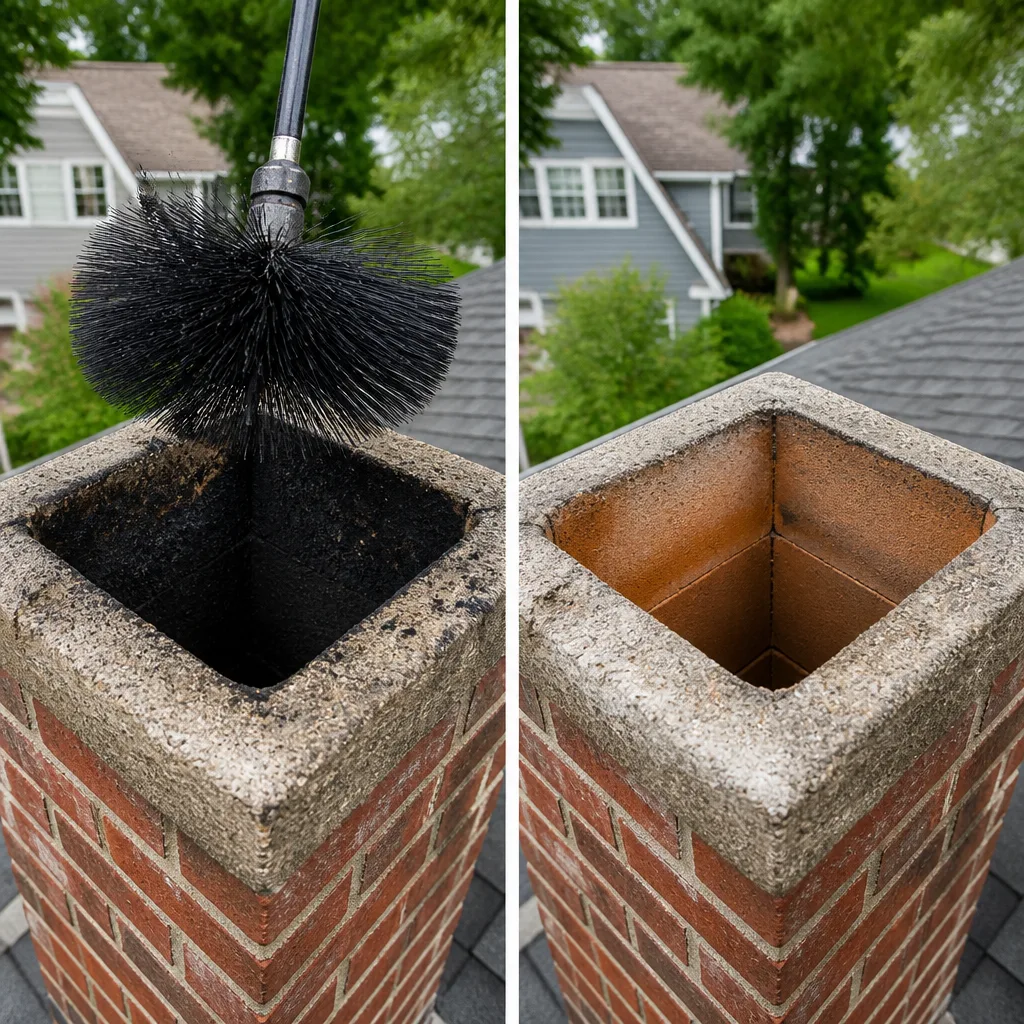 Sweep & inspection
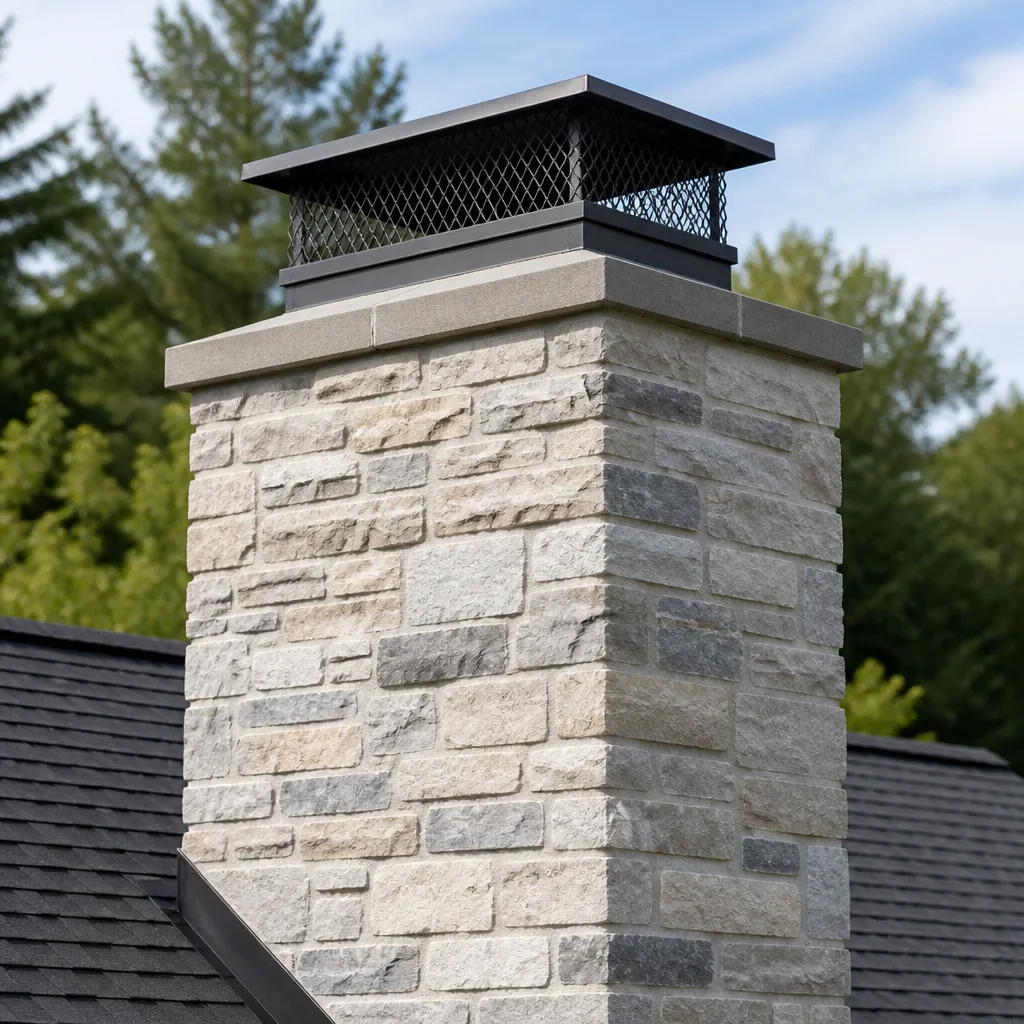 Caps & crowns
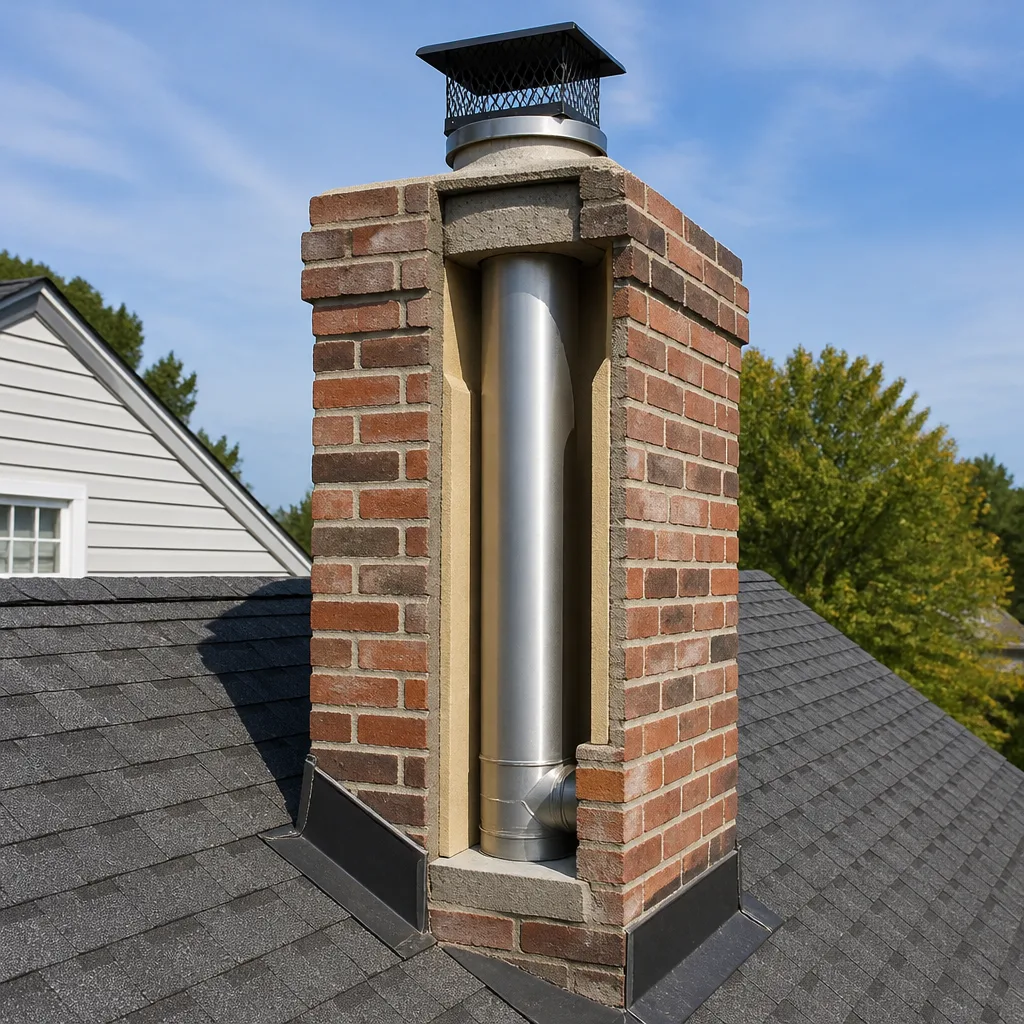 Flue relining
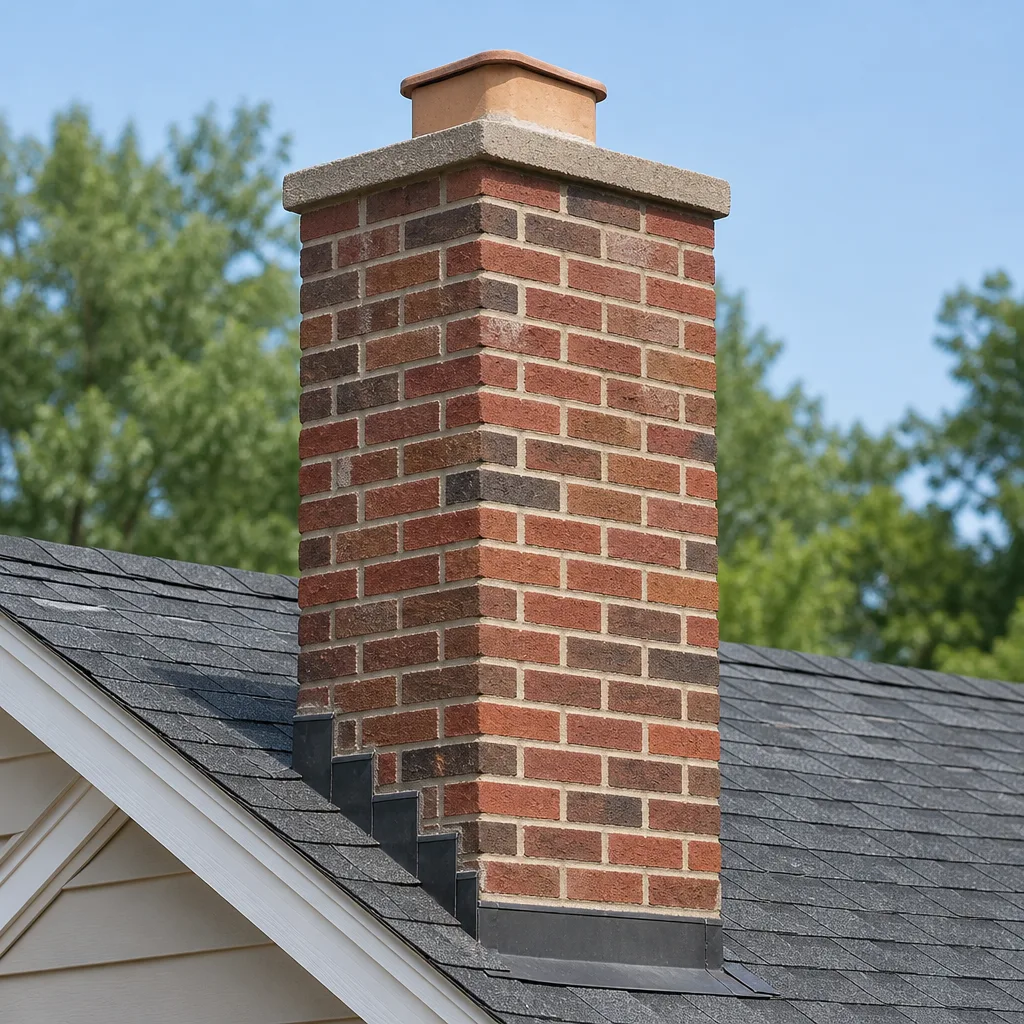 Masonry repair
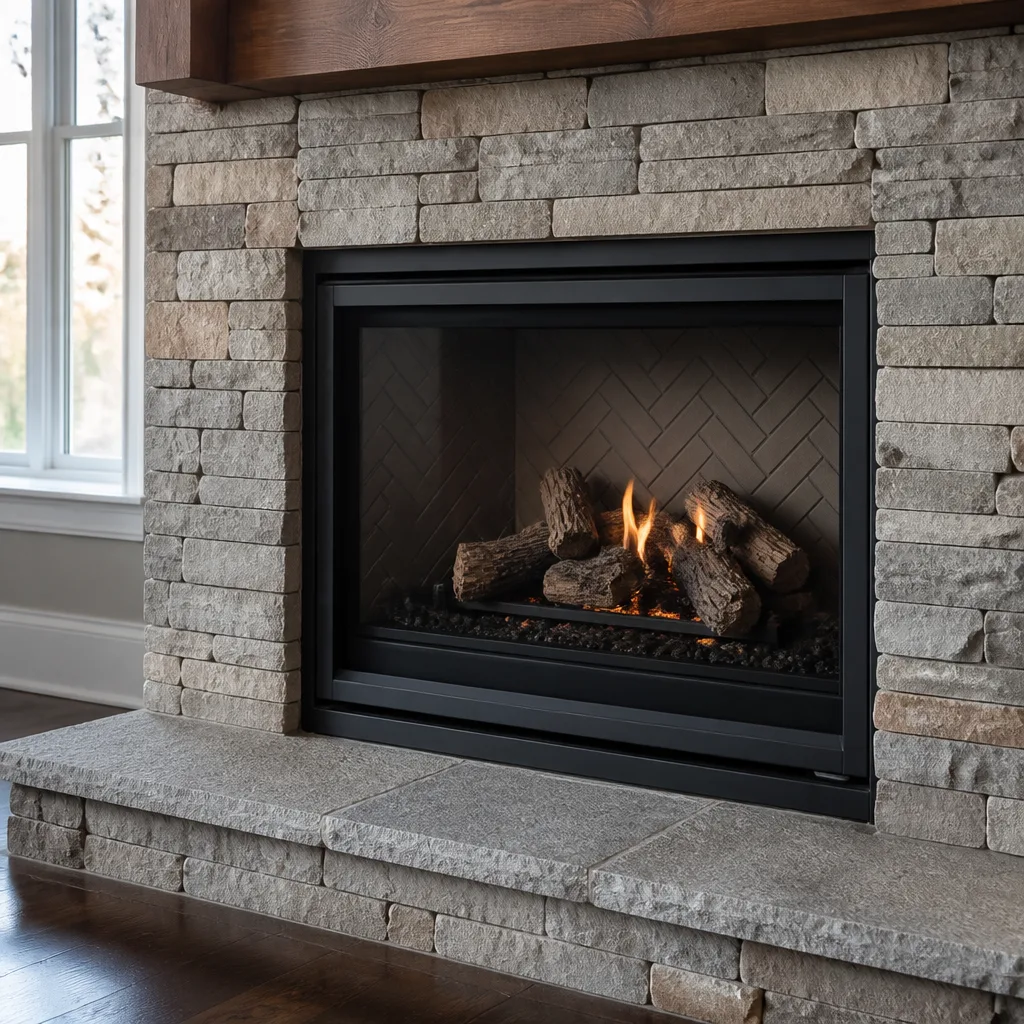 Gas fireplace service
Level 1 sweep and inspection to the NFPA 211 annual standard - flue, crown, cap, and flashing checked and photographed
Chimney sweep logs do not sweep chimneys. They loosen some creosote - which then falls where a brush and vacuum still have to collect it.
DIY vs Professional Chimney Cleaning: The Eastvale Homeowner’s Decision Guide
A chimney brush costs about $40 at any hardware store in Eastvale, and every year some homeowners grab one, climb a ladder, and run it up and down their flue a few times. They come back inside, brush the soot off their hands, and feel like they’ve done the job. The problem is that cleaning was never the hard part. The hard part is knowing what you’re looking at after you’ve cleaned, and without a camera you’re working blind. This guide walks through what a DIY sweep can genuinely accomplish, where it falls short, and how to make the right call for a fireplace that keeps your home warm without keeping you up at night.
Quick Answer
For a newer fireplace with light, powdery soot and a homeowner who’s comfortable on a ladder, a careful DIY cleaning can remove basic buildup. But if your flue has glossy, tar-like Stage 2 or 3 creosote, if your home is more than 20 years old, if you’ve had a chimney fire, or if you’ve never had a camera inspection, professional cleaning in Eastvale is the safer choice. The brush gets the loose stuff; the camera and training catch what brush misses.
Styles & brands we work with
- Sweep & inspection
- Caps & crowns
- Flue relining
- Masonry repair
- Gas fireplace service
Table of Contents
- What a DIY Chimney Cleaning Can Actually Accomplish
- What a DIY Chimney Cleaning Cannot Do
- Understanding Creosote: The Three Stages That Change Everything
- The Equipment Gap: What Professionals Use That You Don’t Have
- When Professional Cleaning Is Non-Negotiable
- Insurance and Liability: What Your Carrier Looks For After a Fire
- The Middle Path: What You Can Maintain Between Professional Visits
- How Eastvale’s Climate and Housing Stock Affect Your Chimney
What a DIY Chimney Cleaning Can Actually Accomplish
Let’s be fair to the homeowner who wants to handle this themselves. A basic chimney cleaning is not rocket science. You run a brush through a flue, and if the only thing in there is loose, powdery Stage 1 soot, you’ll knock most of it down into the firebox where you can vacuum it out. For a fireplace that gets used occasionally, maybe a dozen fires a season, and that was professionally cleaned within the last couple of years, a DIY touch-up between professional visits is not unreasonable.
Here’s what a careful DIY cleaning can legitimately accomplish:
- Remove loose soot and light Stage 1 creosote from the accessible portions of the flue.
- Clear the smoke shelf, the flat area just above the damper where soot tends to accumulate and where lightweight debris often settles.
- Inspect the firebox and damper visually for obvious damage or buildup you can see from inside the fireplace.
- Check the chimney cap from the ground with binoculars for visible blockages, rust, or a missing spark arrestor screen.
- Clean the area around the fireplace, including the hearth and the glass doors if your fireplace has them.
We’ve seen Eastvale homeowners do a perfectly competent job removing light soot with a wire brush and a shop vacuum. The mechanical act is not the issue. What matters is whether the person holding the brush can interpret what they’re seeing, and that’s where the divide between DIY and professional cleaning gets real.
What a DIY Chimney Cleaning Cannot Do
The single biggest limitation of a DIY chimney sweep is that you cannot see the inside of your flue. A standard chimney brush on a flexible rod tells you nothing about the condition of the flue liner, the presence of hidden cracks, or whether the creosote stuck to the walls is the kind that a brush physically cannot remove. Glazed creosote, the shiny, tar-like substance that forms when Stage 2 or 3 deposits are repeatedly heated and cooled, does not come off with a wire brush. Not for you, not for us, not for anyone. It requires chemical treatment or mechanical removal with specialized rotary equipment.
Beyond the visibility problem, a DIY cleaning also cannot:
- Assess flue tile condition. Cracked or spalled flue tiles are a fire hazard, and you can’t see them from the top or bottom of the chimney without a camera.
- Measure creosote thickness accurately. What looks like a thin coating may be a quarter-inch of Stage 2 creosote in the middle of the flue.
- Confirm proper clearance to combustibles. Fire codes specify minimum distances between a chimney and framing, drywall, and insulation. You need training to recognize violations.
- Check the full length of the flue for offsets, separations, or animal nests. A brush passes through; it doesn’t tell you what’s hiding in an offset or a void.
- Document the condition for insurance purposes. After a chimney fire, a carrier will ask for proof of maintenance. A receipt from a qualified sweep is evidence. A story about brushing it yourself is not.
In our experience, the homeowners who call us after a DIY attempt are usually calling because something didn’t feel right. Maybe the brush got stuck. Maybe they saw something they didn’t like near the top. Maybe they just realized halfway through that they were 30 feet up on a ladder with no harness and no plan for what to do if the brush dislodged a raccoon. The honest answer is that cleaning a chimney is easy to do poorly and hard to do safely and thoroughly.
Understanding Creosote: The Three Stages That Change Everything
Every conversation about chimney cleaning eventually lands on creosote, because creosote is the reason chimneys catch fire. It’s a byproduct of incomplete wood combustion: smoke cools as it rises, and the unburned particles condense on the flue walls. The stuff builds up in layers, and those layers have distinct personalities.
Stage 1 creosote is flaky, dry, and dusty. It looks like black soot and brushes off fairly easily. This is what most DIY cleaning can handle. If this is all that’s in your flue, a brush will remove most of it.
Stage 2 creosote is crunchy, shiny, and harder. It looks like black cornflakes stuck to the walls. A standard hand brush will knock some of it off, but it won’t get the flue clean, and the residue left behind acts like a seed for faster buildup next season. Professionals typically use rotary cleaning heads with chains or stiff poly bristles to strip Stage 2 deposits.
Stage 3 creosote is glazed. It looks like tar, it’s highly concentrated fuel, and it is extremely difficult to remove by brushing alone. In Eastvale, where winter fires are often low and slow rather than hot and roaring, Stage 2 and Stage 3 creosote are common because the flue never gets hot enough to burn off the early-stage deposits. A homeowner who runs a brush through a Stage 3 flue will see mostly black on the brush and think they got it, when in reality they just polished the surface of a fuel layer that’s waiting for one hot fire.
If you’re unsure what stage you’re dealing with, that uncertainty is itself an answer: a professional can tell you in minutes with a camera, and you never have to guess at the fire risk in your own home.
The Equipment Gap: What Professionals Use That You Don’t Have
Walk into any hardware store and you’ll find chimney brushes. Walk onto a professional sweep’s truck and you’ll find a different tier of equipment entirely. The gap matters because the equipment determines what can be done and what can be verified.
Closed-circuit camera inspection. This is the single most important difference between DIY and professional service. A camera on a flexible rod goes up the flue and sends live footage to a screen. The operator sees the full liner, every offset, every crack, every patch of glazed creosote, every rusted damper hinge. Without this, a cleaning is a blind sweep. With it, the sweep can show you exactly what’s there, in photos, in plain language, with no pressure to fix something you can’t verify.
Rotary cleaning systems. Professional sweeps in Eastvale use drill-driven rotary heads that spin stiff poly rods or chains at high speed against the flue walls. This does what a hand brush cannot: it breaks up Stage 2 creosote and, in some cases with chemical pre-treatment, begins to address Stage 3 deposits. No homeowner owns this equipment, and renting it is not a practical option.
Professional-grade vacuum systems with HEPA filtration. The soot and creosote dust that comes out of a chimney is carcinogenic and irritating to lungs. Consumer shop vacuums do not have adequate filtration, and running one inside your living room while brushing a chimney fills the house with particulates you don’t want your family breathing.
Chimney-specific hand tools. The things a sweep carries: a variety of brush sizes, rod types, scraping tools, chemical treatments for glazed creosote, and safety equipment including proper ladders, roof anchors, and harnesses. Every one of those pieces exists because a specific chimney problem required it.
The equipment gap is not about gatekeeping. It’s about physics and optics. You cannot clean what you cannot reach, and you cannot assess what you cannot see.
When Professional Cleaning Is Non-Negotiable
There are specific conditions where a professional chimney sweep in Eastvale is not optional. If any of these apply to your home, put the ladder away and make the call.
- You have Stage 2 or Stage 3 creosote. If the buildup is shiny, crunchy, or tar-like, a hand brush will not do the job. Continuing to burn wood on top of glazed creosote is a chimney fire waiting for the right temperature.
- Your home is more than 20 years old. Masonry flues age. Mortar joints erode, tiles crack, and the liner that was sound when the house was built may not be sound now. Eastvale has a mix of newer subdivisions and older established neighborhoods, and the older the home, the more likely the flue has hidden damage.
- You’ve had a chimney fire. Even a small one. A chimney fire can crack flue tiles and compromise the liner in ways that are invisible from the outside. After any chimney fire, a camera inspection is the only way to know the flue is still safe.
- You’ve never had a professional inspection since moving in. Previous owners leave behind surprises. A professional sweep documents what’s there so you’re not inheriting someone else’s deferred maintenance.
- You smell smoke in the house during or after fires. That’s a drafting or liner problem, not a normal chimney quirk, and it needs professional diagnosis.
- You see water staining on the ceiling or walls near the chimney. Water intrusion through a chimney can cause structural damage and is a sign of flashing or cap failure that a cleaning won’t fix.
Insurance and Liability: What Your Carrier Looks For After a Fire
Nobody wants to think about the insurance claim after a house fire, but the reality is that insurance companies investigate chimney fires carefully. They look for the cause, and they look for whether the homeowner performed reasonable maintenance. This is where DIY cleaning gets complicated.
Most homeowners policies cover chimney fires, but the carrier will ask questions. When was the chimney last cleaned? By whom? Do you have documentation? If your answer is “I cleaned it myself with a brush from the hardware store,” you may technically have performed maintenance, but you have not created the paper trail that demonstrates professional-level due diligence.
A professional sweep provides a dated service record. That document states what was found, what was cleaned, what the creosote level was, and what condition the liner was in. After a fire, that record is evidence that you took the hazard seriously and hired qualified help. It’s not a guarantee against a claim denial, but it is the kind of documentation that carriers and adjusters respect.
There’s also the personal liability dimension. If you clean your own chimney and miss damage that later causes a fire, you have no one to call but yourself. If a professional misses something that a reasonable professional should have caught, their liability insurance exists for that reason. That’s not to say professionals are infallible; it’s to say that when you hire a licensed and insured company, the risk is distributed, not concentrated on your own shoulders.
For Eastvale homeowners, the practical takeaway is this: document every professional cleaning, keep the receipts, and if you choose to do touch-up work between professional visits, do it in addition to professional service, not instead of it.
The Middle Path: What You Can Maintain Between Professional Visits
This doesn’t have to be an all-or-nothing decision. There’s a reasonable middle path that many Eastvale homeowners take, and it works well when the overall chimney system is in good shape and the heavy lifting is done by professionals on a regular schedule.
Between professional cleanings, here’s what you can legitimately do yourself:
- Visual inspection from the ground. Every month during burning season, walk outside and look at your chimney. Check the cap for debris, look for missing bricks or crumbling mortar, and look for any signs of animal activity. Binoculars help.
- Check the damper. Open and close it a few times before the season starts. It should move freely and seal reasonably well when closed. A stuck or warped damper is a professional repair, but you can identify the problem yourself.
- Monitor the firebox. After each fire, once the ashes are cool, look at the firebox walls and floor. Loose soot is normal; cracks in the refractory panels or masonry are not.
- Watch for signs of moisture. Water staining on the ceiling near the chimney, a musty smell after rain, or efflorescence (white powdery deposits) on the exterior masonry all signal water intrusion that needs professional attention.
- Keep a simple log. Note how many fires you burn each season and when your last professional cleaning was. The general rule of thumb is an annual inspection for any wood-burning fireplace, and more frequent cleaning if you burn more than a cord of wood per year or if you burn soft woods like pine.
- Check your dryer vent cleaning needs at the same time. It’s a different system, but the same principle applies: regular professional maintenance prevents the problem you can’t see.
What you should not do yourself: anything involving the interior of the flue beyond light brushing, anything on the roof that requires more than a step ladder, any attempt to remove glazed creosote, and any repair to the liner, cap, or masonry. The line is simple: you can look, you can do light cleaning, you do not do structural work and you do not do high-altitude work without professional training and equipment.
Chimney Sweep Eastvale covers the full system under one roof: sweeping, structural repair, and dryer vent cleaning. That matters because a chimney problem and a dryer vent problem are both fire risks, and the same trained technician can address both in one visit.
How Eastvale’s Climate and Housing Stock Affect Your Chimney
Eastvale sits in the Inland Empire, where winters are mild and the hot season runs long. That climate shapes how chimneys behave here, and it’s worth understanding because the generic chimney advice from a national website doesn’t always apply.
First, Eastvale winters don’t produce the deep, continuous cold that northern climates do. That means fireplaces in Eastvale are used differently: shorter fires, often in the evening, often on weekends when the temperature drops. Those short, low fires are exactly the conditions that produce Stage 2 and Stage 3 creosote because the flue never gets hot enough, long enough, to burn off early-stage deposits. Frequent low-burn fires are hard on a chimney in a way that fewer, hotter fires are not.
Second, Eastvale’s housing stock spans several construction eras. Newer subdivisions with tract homes built in the 2000s and 2010s often have prefabricated metal chimneys rather than traditional masonry flues. Those systems have their own maintenance requirements, and they are not designed to be cleaned the same way as a masonry chimney. Older homes, especially those built before the major Eastvale development boom, may have masonry chimneys that are now two or three decades old. A 20-year-old masonry flue in a mild climate still ages: mortar joints erode from rain and heat cycling even without freeze-thaw stress, and liner tiles crack from thermal expansion. The absence of snow doesn’t mean the absence of wear.
Third, Eastvale’s inland location means dry summers and occasional heavy winter rain. Dry conditions keep creosote brittle but also mean that any water intrusion through a cracked cap or failed flashing does its work quickly during the rainy months. A chimney that leaks during a February storm may show no signs for months until you notice the staining or smell the must.
The practical takeaway for an Eastvale homeowner is this: your climate does not demand the aggressive cleaning schedule of a snowy northern town, but it does demand annual inspection because the fires you build are low and slow, and the creosote they produce is the stubborn kind that doesn’t brush off.
Common Mistakes to Avoid
- Skipping the inspection because you don’t use the fireplace much. In Eastvale, even a fireplace used ten times a year can build dangerous creosote because the fires are small and the flue never gets hot enough to clean itself. Low use does not equal low risk.
- Using a consumer chimney brush on glazed creosote. It will not work. It will polish the surface of the glaze and give you false confidence. Glazed creosote requires chemical treatment or rotary mechanical removal.
- Cleaning from the roof without proper fall protection. A fall from even a single-story roof can be fatal or life-altering. If you are not comfortable working at height with proper anchoring and a harness, don’t.
- Burning pine or other soft woods exclusively. Soft woods produce more creosote than hard woods. If you’re burning whatever’s cheap, you’re likely building up Stage 2 creosote faster than you think.
- Assuming a prefabricated metal chimney can be cleaned like a masonry one. Metal chimneys have specific requirements. Using the wrong brush type can damage the liner.
- Ignoring the dryer vent because “it’s a different system.” Dryer vents catch fire for the same reason chimneys do: lint accumulates, airflow drops, heat builds. A home with a clean chimney but a packed dryer vent is not fire-safe.
- Waiting until you smell smoke to investigate. By the time smoke is backing up into the house, the problem has been developing for a while. Annual inspection catches it earlier and cheaper.
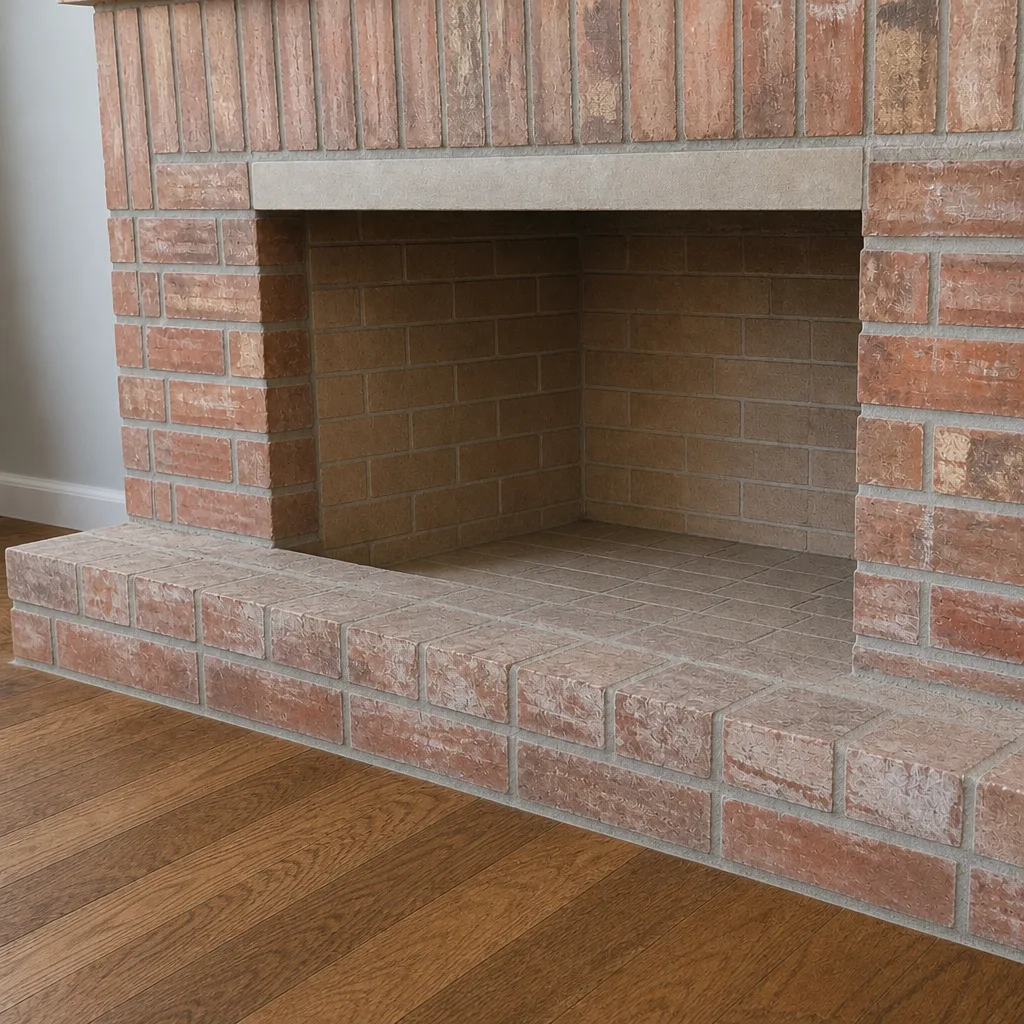
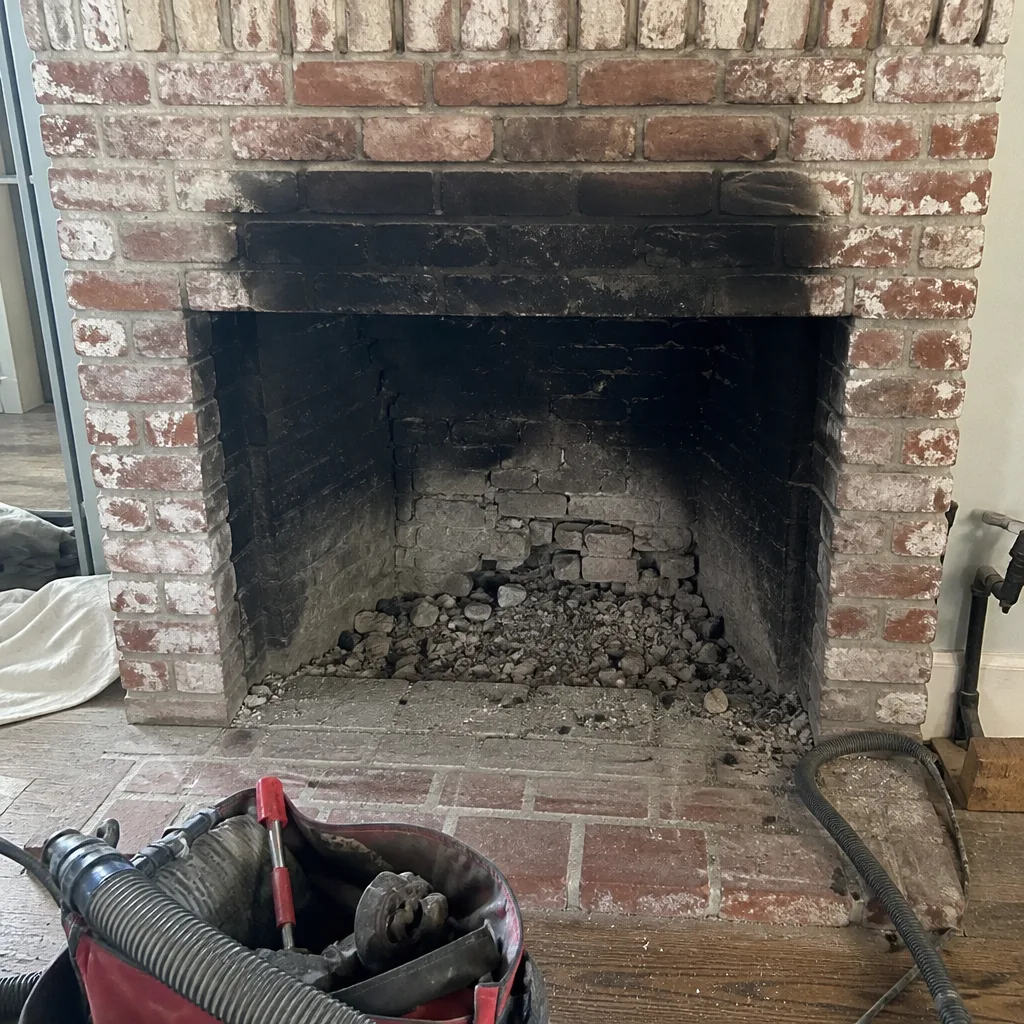
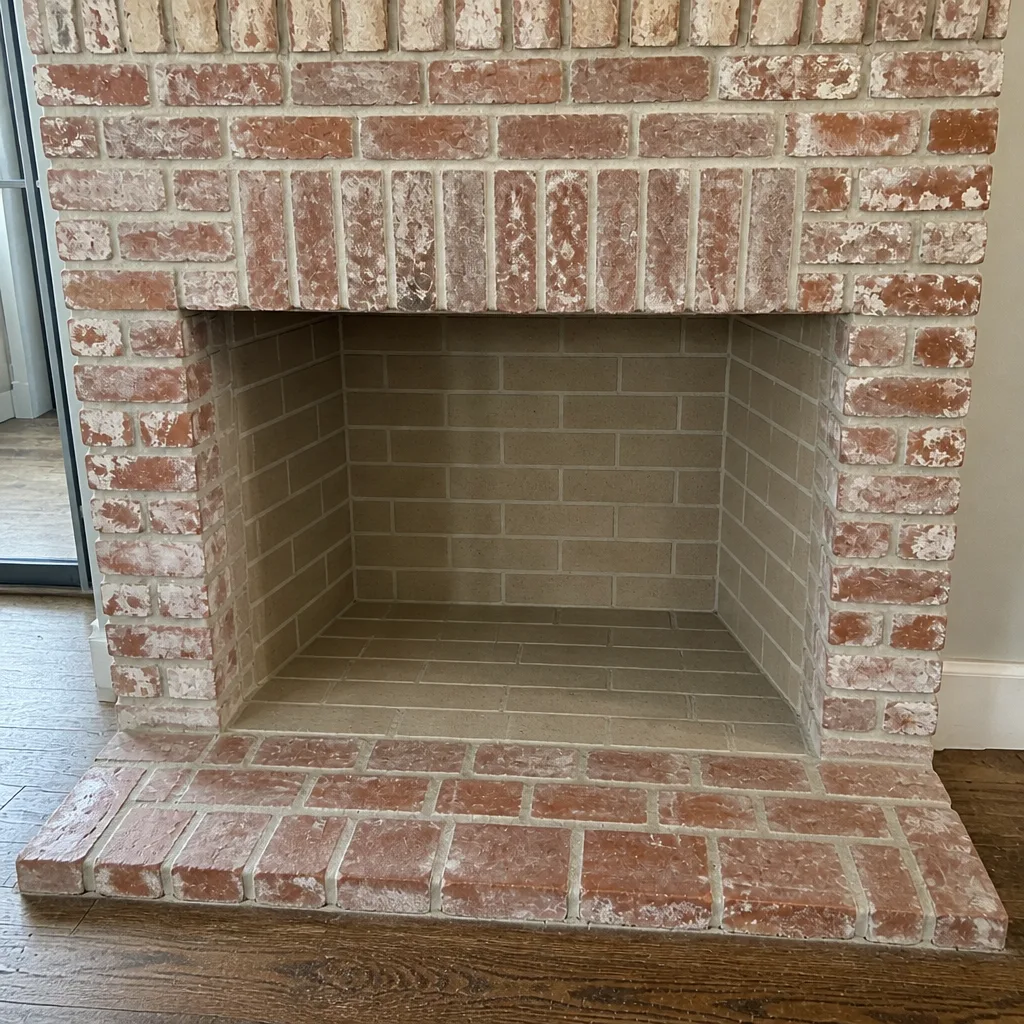
See the difference
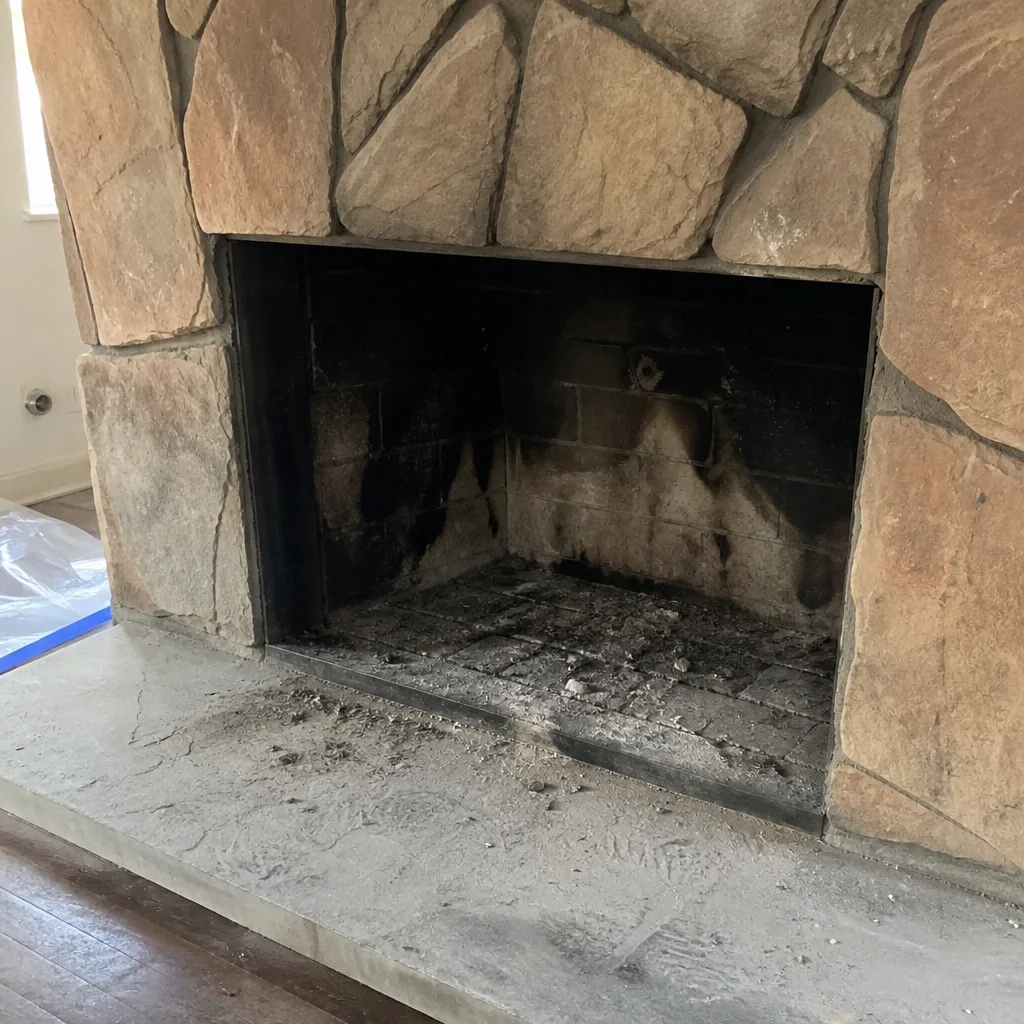 Before
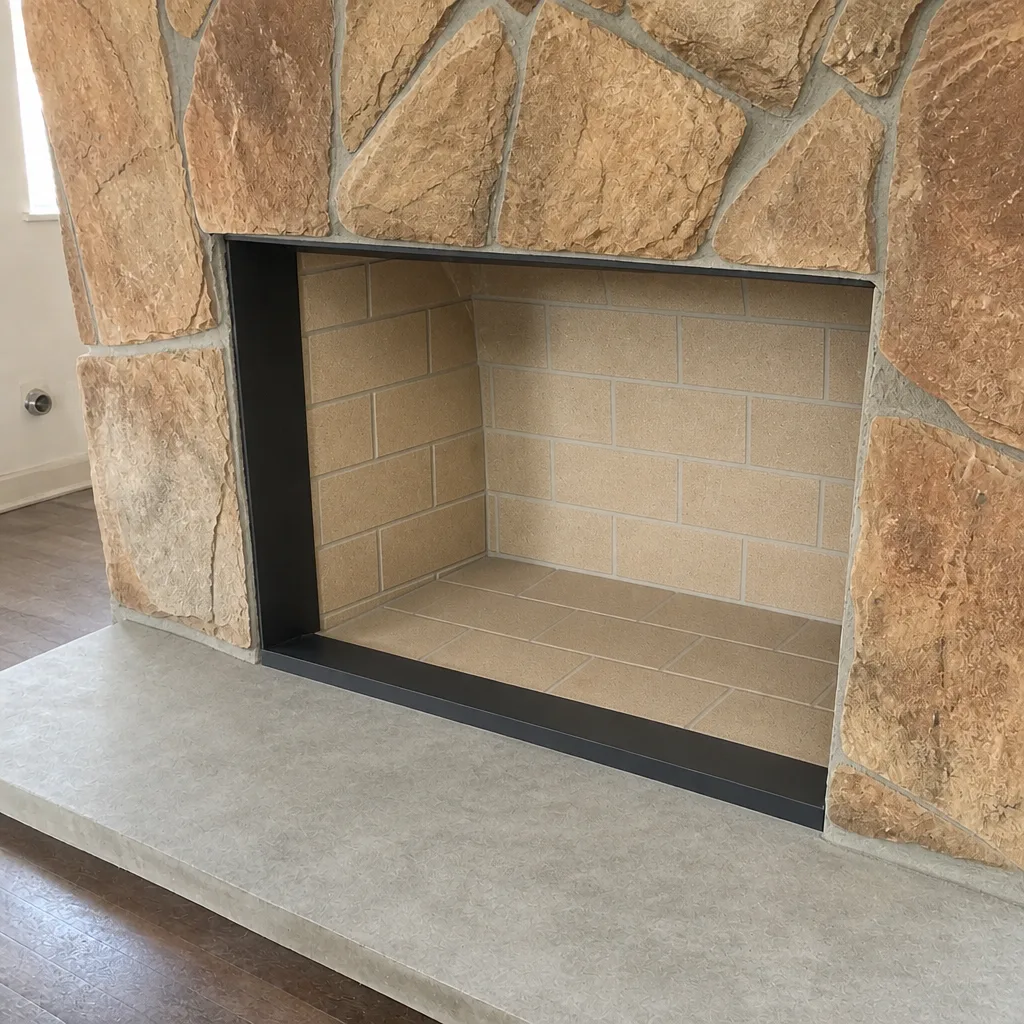 After
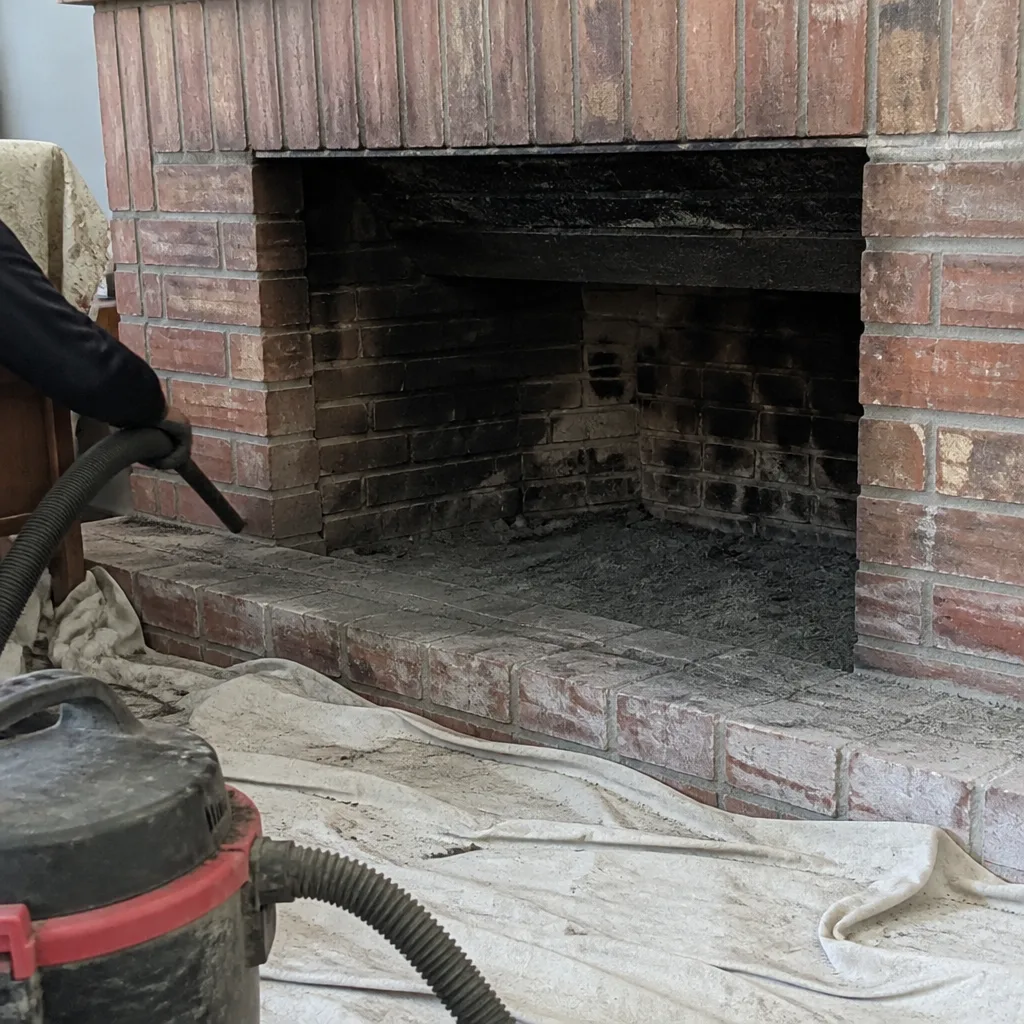 Before
 After
 Before
 After
When to Call a Professional
Call a professional when any of these conditions apply: you see shiny or tar-like creosote anywhere in the flue or firebox, your home is more than 20 years old and you’ve never had a camera inspection, you’ve had a chimney fire even a small one, you smell smoke in the house during or after fires, you see water staining near the chimney, or you simply don’t want to be on your roof with a brush in one hand and a ladder in the other. Any one of those is enough reason to bring in trained eyes and a camera. Chimney Sweep Eastvale offers free estimates in Eastvale, and every inspection includes photos of what we find, in plain language, with no pressure to approve work you can’t verify. Call (866) 569-7136. We answer 24/7. Fast dispatch from 7am to 7pm, Sunday through Friday.
Frequently Asked Questions
A standard chimney sweep in Eastvale typically falls in the $150 to $350 range depending on the chimney type, accessibility, and creosote level. Masonry chimneys with heavy Stage 2 or Stage 3 buildup run higher because the work is more involved. Metal prefabricated chimneys are usually at the lower end of that range. The exact price is set by written estimate after an inspection, and the estimate is free. Call (866) 569-7136 for a quote specific to your chimney.
Most fire safety organizations recommend an annual inspection for any wood-burning fireplace, and cleaning whenever creosote buildup reaches about 1/8 inch or more. If you burn more than a cord of wood per season or burn soft woods like pine regularly, you may need cleaning more often. Gas fireplaces also need periodic inspection, though they don’t produce creosote.
You can remove light Stage 1 soot with a brush if you’re comfortable on a ladder and your flue is in good condition. But you cannot see the inside of the flue, you cannot remove glazed creosote with a hand brush, and you cannot document the condition of the liner for insurance purposes. Most homeowners who DIY safely do it as a touch-up between professional cleanings, not as a replacement for them.
Creosote builds up in stages. A few years of skipped cleaning in Eastvale, with low and slow fires, often means Stage 2 or Stage 3 creosote by the time anyone looks. The risk is a chimney fire, which can crack flue tiles and spread into the house structure. You may not know anything is wrong until the fire happens, which is why annual inspection matters even if the fireplace seems to be working fine.
Gas fireplaces don’t produce creosote, but they still need annual inspection. Gas logs can produce acidic condensation that deteriorates flue liners over time, and debris like bird nests or leaves can block the flue. A blocked flue on a gas fireplace creates a carbon monoxide risk, which is invisible and odorless. Annual inspection covers this.
Yes. Both systems remove combustion byproducts or hot air from the home, and both fail by accumulating flammable material: creosote in chimneys, lint in dryer vents. A packed dryer vent restricts airflow, overheats, and can ignite the lint. The same inspection mindset applies to both: clean it on schedule, document the cleaning, and fix problems before they start.
The Bottom Line
The question isn’t whether you can run a brush through your chimney. You can. The question is whether that brushing actually makes your home safer, and the honest answer is that without a camera and without training to interpret what the camera shows, you’re guessing. In Eastvale, where low and slow fires build stubborn creosote and where homes range from new tract builds to 20-plus-year-old masonry chimneys, the risk of guessing wrong is real. A professional sweep costs less than a deductible, takes less than a day, and leaves you with documentation, photos, and a flue you can see is clean. That’s the difference between cleaning a chimney and knowing it’s clean.
Written by the team at Chimney Sweep Eastvale, serving Eastvale since 2016.